

What if your security camera could think, analyze, and respond, without waiting for human intervention? What if it could detect threats before they escalate, track suspicious behavior across locations, and even trigger automated actions in real time?
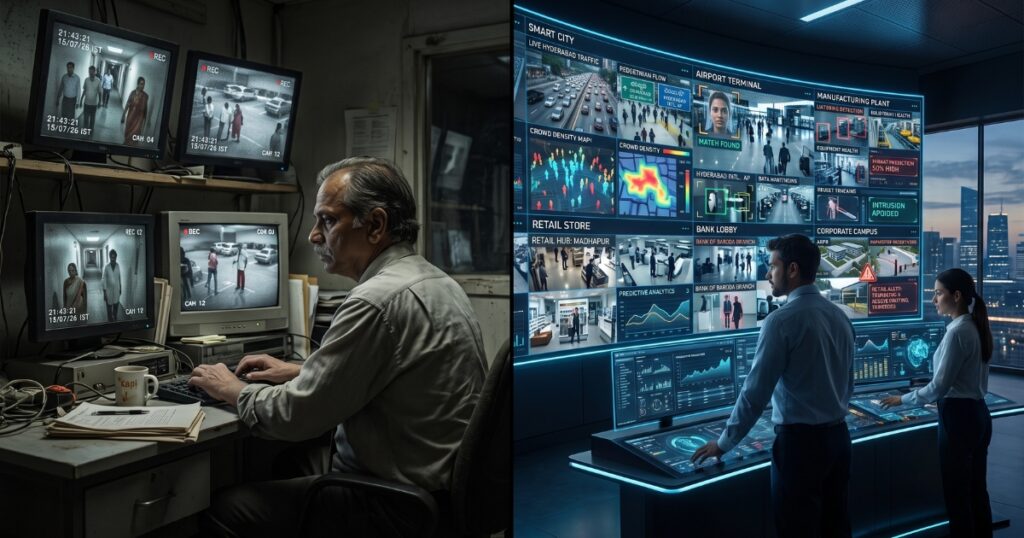
In 2026, this is no longer a “what if.” AI-powered cameras are rapidly replacing traditional security systems, transforming surveillance from passive monitoring into proactive intelligence.
The shift is clear: from recording incidents to preventing them.
The global video analytics market is expanding at an unprecedented pace, driven by demand for smarter surveillance systems.
This rapid growth reflects a fundamental reality: traditional security systems can no longer keep up with the complexity and speed of modern threats.
AI cameras use computer vision and deep learning to continuously analyze live video feeds. Instead of waiting for an incident to occur, they predict and prevent risks before they escalate.
Impact: Faster response times, reduced human dependency, and enhanced situational awareness.
Traditional systems are designed for forensics. AI systems are built for intervention.
This real-time intelligence enables organizations to act within seconds—not hours.
Result: Security shifts from reactive investigation to proactive response.
One of the biggest limitations of traditional surveillance is its inability to interpret human behavior.
AI cameras change that.
For example, in public spaces, AI can detect early signs of panic or aggression—helping authorities intervene before situations escalate.
This is where AI security becomes predictive, not just observational.
In 2026, the camera itself has become the computing unit.
Edge AI enables:
This is particularly critical for industries like transportation, manufacturing, and defense-where delays can have serious consequences.
Traditional security systems operate in silos-each camera, each system functioning independently.
AI cameras, however, are part of a connected ecosystem.
This creates a Unified E-Surveillance Ecosystem, where:
This level of integration is impossible with legacy systems.
Industry Use Cases: Where AI Cameras Are Making the Biggest Impact
AI cameras are transforming urban infrastructure by:
Cities are evolving into intelligent ecosystems powered by real-time video insights.
Retailers are leveraging AI cameras to:
Security is no longer just about loss prevention-it’s about enhancing customer experience.
AI cameras help:
This reduces downtime and improves workplace safety.
Banks use AI cameras for:
This ensures faster response to suspicious activities and minimizes risk.
While AI cameras offer significant advantages, adoption comes with challenges:
With increased surveillance comes increased responsibility. Organizations must:
Migrating from traditional systems to AI-driven infrastructure requires:
AI models must be continuously trained to avoid:
The next phase of security isn’t just intelligent-it’s autonomous.
AI cameras are evolving to:
This is not science fiction- it’s the direction security is heading.
So, are traditional security systems becoming obsolete?
In many ways, yes.
AI cameras are not just replacing legacy systems-they are redefining what security means. From real-time intelligence to predictive insights, they are enabling organizations to move from watching incidents to preventing them entirely.
In 2026, security is no longer about cameras.
It’s about intelligence, speed, and the ability to act-before it’s too late.
Scanalitix, a cutting-edge security center, safeguards clients through expert services like video surveillance, remote concierge, and advanced monitoring services.
Phone: +91 91547 84455
Email: letsconnect@magellanic-cloud.com
Subscribe your Email address for latest news & updates
©2026, All Rights Reserved by ScanalitiX